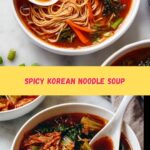
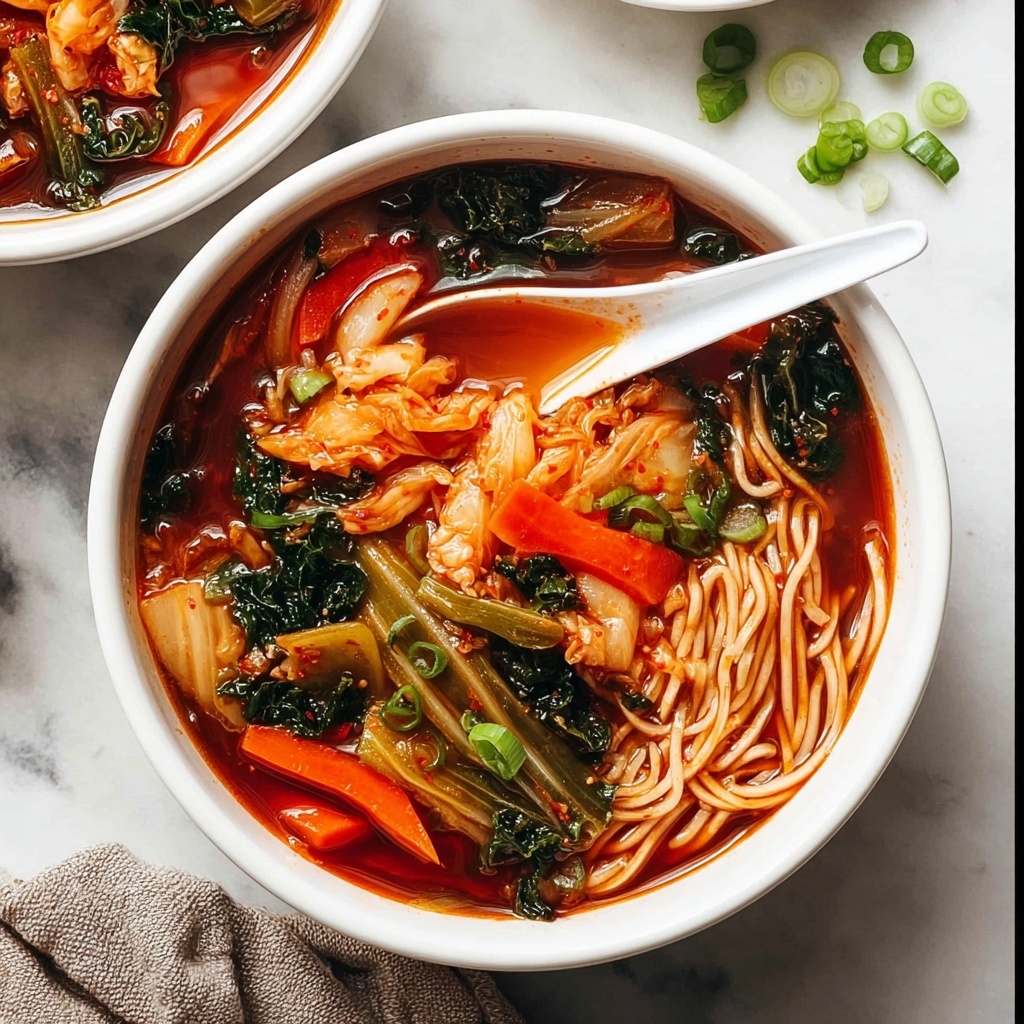
If you’re craving a bowl of comfort that’s bursting with flavor yet refreshingly light, you have to try this Spicy Korean Noodle Soup (Quick & Healthy) Recipe. It’s the perfect balance of spicy, tangy, and savory, with the satisfying chew of fresh egg noodles swimming in a vibrant, wholesome broth. Each spoonful delivers layers of complexity thanks to kimchi, gochujang, and fragrant aromatics, making this soup your new go-to for a quick healthy meal that doesn’t skimp on taste or heartiness.
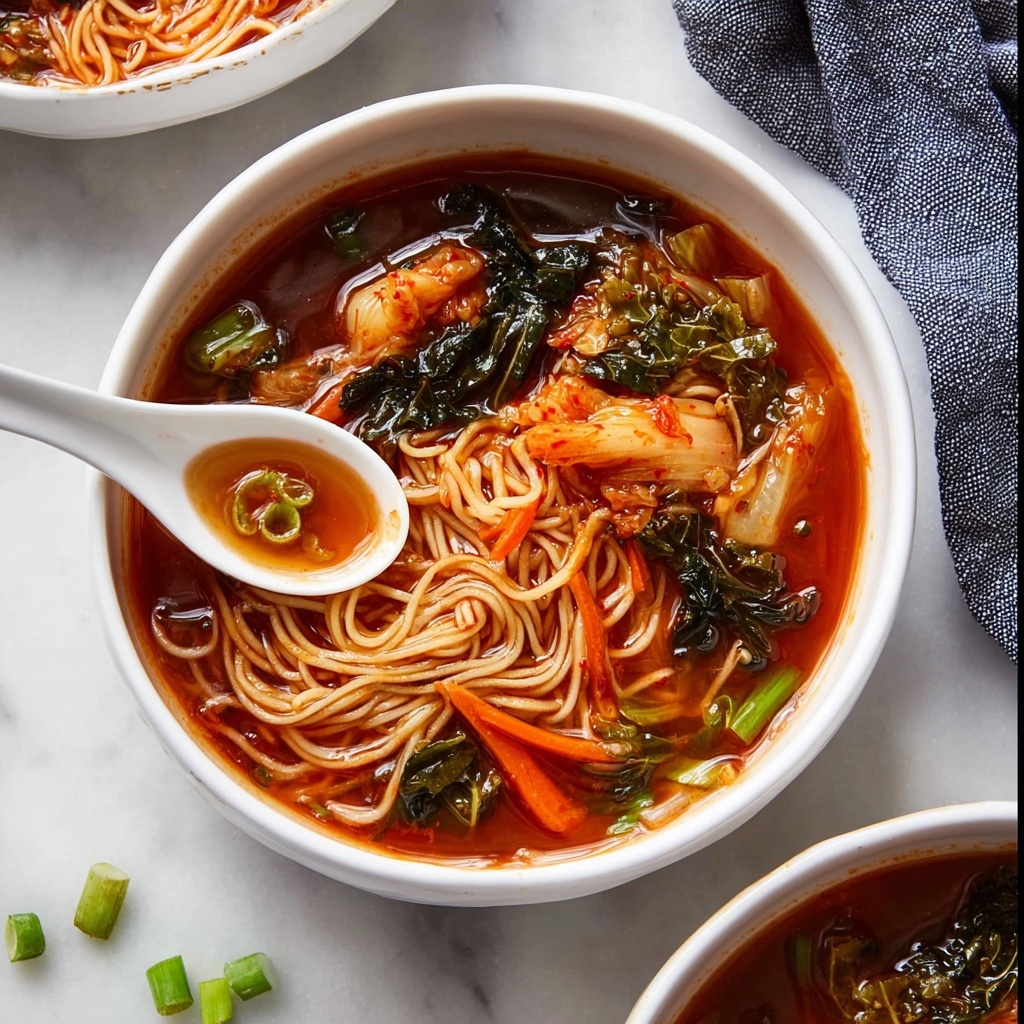
Ingredients You’ll Need
All you need for this Spicy Korean Noodle Soup (Quick & Healthy) Recipe are simple but impactful ingredients. Each one plays a vital role, whether it’s building the deep umami broth, adding crunch and acidity, or providing that spicy, slightly sweet heat that wakes up your palate.
- 4 cups chicken stock/broth (low-sodium): The flavorful base that carries all the seasonings and melds the soup together.
- 2/3 cup cabbage kimchi: Adds tang, spice, and a dose of probiotic goodness that livens up the soup.
- 2 tbsp kimchi juice: Extra punch of fermented flavor straight from your kimchi jar.
- 3 tbsp gochujang: Korean chili paste that brings a deep, rich heat with subtle sweetness.
- 2 tbsp light soy sauce: Enhances saltiness and depth without overpowering other flavors.
- 2 tsp fish sauce: Brings complexity and savory brightness; substitute extra soy if preferred.
- 1 tbsp Chinese cooking wine (Shaoxing wine): Adds a subtle aromatic lift to the broth.
- 2 slices ginger (skin on): Fresh warmth and slight zing that complements garlic perfectly.
- 1 large garlic clove (smashed): Builds fragrance and a mellow bite deep in the broth.
- 200g thin fresh egg noodles: Or 100g dried; their silky texture soaks up the soup beautifully.
- 4 stems choi sum (or other Asian greens): Adds crunch and a vibrant green freshness.
- 1 small carrot (thin matchsticks): Bright color and a sweet, crisp texture.
- 2 1/2 tsp toasted sesame oil: Nutty richness to round out the flavors just before serving.
- 1/4 cup finely sliced green onions: Freshness and mild oniony brightness as garnish.
How to Make Spicy Korean Noodle Soup (Quick & Healthy) Recipe
Step 1: Build the Broth
Start by combining the chicken stock, kimchi, kimchi juice, gochujang, soy sauce, fish sauce, Chinese cooking wine, ginger slices, and smashed garlic in a saucepan. Bring this vibrant mixture to a simmer over medium-high heat. Then, reduce the heat so it simmers gently for about 10 minutes, allowing all those flavors to mingle and develop depth. This broth is really the soul of your Spicy Korean Noodle Soup (Quick & Healthy) Recipe, so don’t rush it.
Step 2: Cook the Vegetables
Next, add the choi sum stems and carrot matchsticks to the simmering broth, letting them soften just enough, about 2 minutes. Then toss in the tender choi sum leaves and simmer for an additional minute. This step ensures your vegetables stay bright and crisp-tender rather than soggy. Right before serving, stir in the toasted sesame oil for a fragrant, nutty finish that elevates the entire bowl.
Step 3: Prepare the Noodles
While the broth simmers, cook your egg noodles according to the package instructions—fresh noodles will only take a couple of minutes, while dried noodles might need a bit longer. Once cooked, drain and rinse the noodles under cold water quickly to stop the cooking, then shake off any excess moisture. The noodles will be the delightful chewy base for your spicy broth and veggies.
Step 4: Assemble Your Soup
Divide the noodles evenly between two bowls. Remove the garlic and ginger slices from the broth to avoid any overpowering bites. Ladle the hot broth and vegetables over the noodles, sprinkle the finely sliced green onions on top, and get ready to dive into a bowl of comforting, spicy deliciousness. Each serving will be a perfect marriage of flavors and textures, a celebration of Korean-inspired home cooking.
How to Serve Spicy Korean Noodle Soup (Quick & Healthy) Recipe
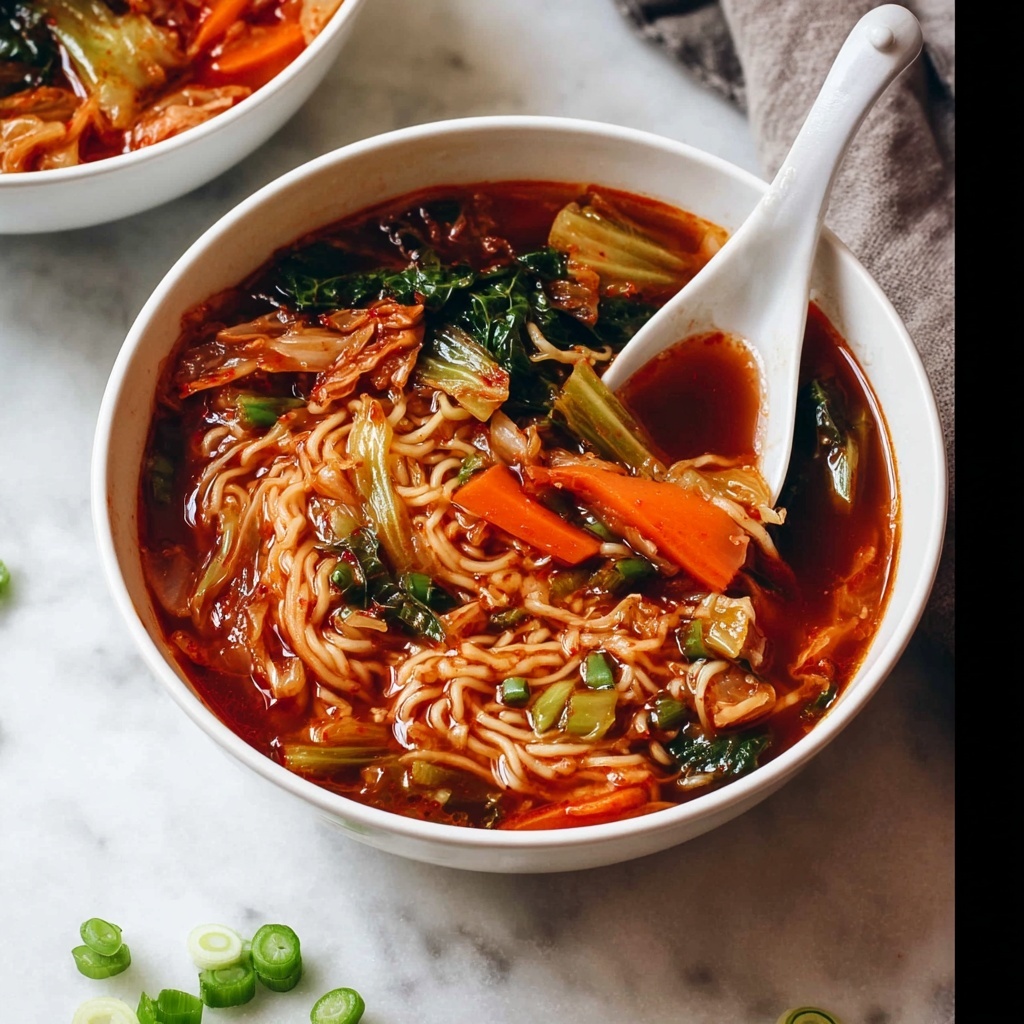
Garnishes
For garnishing, I love adding a few extra toppings to personalize your Spicy Korean Noodle Soup (Quick & Healthy) Recipe. Try toasted sesame seeds for an extra nutty crunch or a soft-boiled egg for richness. Thinly sliced fresh chili or a drizzle of chili oil amps up the heat for spice lovers. Fresh cilantro or Korean perilla leaves can add herbal brightness that complements the umami broth wonderfully.
Side Dishes
This soup is quite filling, but if you want to round out your meal, consider simple sides like steamed rice for soaking up every last drop, or a light cucumber salad dressed with rice vinegar and sesame to cool the palate. Korean-style pickled radishes also make a crisp, refreshing contrast to the warm, spicy noodles. These sides keep the meal balanced and exciting.
Creative Ways to Present
Present your Spicy Korean Noodle Soup (Quick & Healthy) Recipe in a rustic, deep bowl that holds the broth and noodles neatly. Serve with a pair of chopsticks and a soup spoon for an engaging eating experience. For a fun twist, serve the broth separately as a dipping sauce alongside a plate of noodles and veggies to mix bite by bite. This hands-on approach is perfect for dinner parties or casual family meals.
Make Ahead and Storage
Storing Leftovers
If you find yourself with leftover Spicy Korean Noodle Soup (Quick & Healthy) Recipe, store the broth separately from the noodles and vegetables if possible to keep textures intact. Refrigerate all components in airtight containers for up to 3 days. This approach prevents the noodles from becoming gummy and the greens from getting too soggy.
Freezing
The broth freezes beautifully, so if you want to prep ahead, freeze just the broth in a suitable container for up to 2 months. It’s best to add freshly cooked noodles and vegetables when you’re ready to eat, since they don’t freeze well and can lose their texture.
Reheating
When reheating, warm the broth gently on the stove until simmering, then add fresh noodles and vegetables or leftovers if you kept them separate. This keeps everything tasting vibrant and avoids overcooking. Finish with a drizzle of toasted sesame oil and fresh green onions just before serving to revive those bright flavors.
FAQs
Can I make this soup vegetarian or vegan?
Absolutely! Substitute the chicken broth with vegetable broth and replace fish sauce with soy sauce or a vegan fish sauce alternative. Make sure your kimchi is vegan-friendly too, as some contain fish ingredients.
What type of noodles work best in this recipe?
Fresh thin egg noodles are ideal because they cook quickly and have that lovely chewy texture. However, dried egg noodles or even ramen noodles can work well in a pinch. Just adjust cooking times accordingly.
Is this recipe very spicy?
The heat level is moderate thanks to the gochujang and kimchi, but you can adjust it to your taste by adding more or less gochujang. If you want less spice, try reducing it or balancing with a bit more broth.
Can I prepare parts of this soup in advance to save time?
Yes, make the broth ahead and store it in the fridge or freezer. You can also prep and chop the vegetables and green onions in advance. When ready to eat, cook the noodles fresh and combine everything quickly for the best texture.
What can I use if I don’t have Shaoxing wine?
If you can’t find Shaoxing wine, dry sherry or a splash of mirin works as a good substitute. It adds that subtle depth without overpowering the other ingredients.
Final Thoughts
There’s something so heartwarming yet invigorating about a bowl of this Spicy Korean Noodle Soup (Quick & Healthy) Recipe. It’s an absolute joy to make on busy days yet impressive enough to share with friends or family. I encourage you to give it a try—you’ll discover a delicious way to enjoy bold Korean flavors while keeping things light and nourishing. Trust me, once you taste it, this soup will become one of your favorite easy meals to reach for again and again.
Print
Spicy Korean Noodle Soup (Quick & Healthy) Recipe
- Prep Time: 5 minutes
- Cook Time: 15 minutes
- Total Time: 20 minutes
- Yield: 2 servings
- Category: Soup
- Method: Stovetop
- Cuisine: Korean
Description
A quick and healthy Spicy Korean Noodle Soup featuring a flavorful broth infused with kimchi, gochujang, and aromatic spices, served with tender egg noodles and fresh Asian greens. Perfect for a comforting meal with a kick of authentic Korean flavors.
Ingredients
Broth Ingredients
- 4 cups / 1 litre chicken stock/broth (low-sodium)
- 2/3 cup cabbage kimchi
- 2 tbsp kimchi juice (from kimchi tub)
- 3 tbsp gochujang
- 2 tbsp light soy sauce
- 2 tsp fish sauce (or substitute with more soy sauce)
- 1 tbsp Chinese cooking wine (Shaoxing wine)
- 2 slices ginger (sliced 0.7cm / 1/3″ thick, skin on)
- 1 large garlic clove (smashed)
Noodles and Vegetables
- 200g / 7oz thin fresh egg noodles (or 100g / 3.5oz dried)
- 4 stems choi sum (or other Asian greens, cut into 7cm / 2.5″ lengths, stems separated from leaves)
- 1 small carrot (peeled, cut into thin matchsticks)
Finishing Touches
- 2 1/2 tsp toasted sesame oil
- 1/4 cup finely sliced green onions (1 stem)
Instructions
- Broth: Place all broth ingredients in a saucepan. Bring to a simmer over medium-high heat, then reduce the heat to maintain a gentle simmer. Simmer uncovered for 10 minutes to allow the flavors to meld together.
- Cook vegetables: Add choi sum stems and carrot to the simmering broth. Continue to simmer for 2 minutes, then add the choi sum leaves and simmer for another minute. Stir in toasted sesame oil just before serving to add a nutty aroma.
- Noodles: While the broth simmers, cook the egg noodles according to packet instructions in boiling water. Once cooked, drain and rinse quickly under tap water to stop cooking. Shake off excess water thoroughly.
- Assemble: Divide the cooked noodles evenly between serving bowls. Use a slotted spoon to remove the garlic and ginger slices from the broth, then ladle the hot broth and vegetables over the noodles. Garnish with finely sliced green onions and serve immediately.
Notes
- Note 1: Use good-quality cabbage kimchi and save the extra kimchi juice for added depth of flavor in the broth.
- Note 2: Gochujang is a Korean fermented chili paste that provides the signature spicy and savory flavor.
- Note 3: Light soy sauce adds umami and saltiness; adjust according to taste.
- Note 4: Shaoxing wine is a Chinese cooking wine that enhances the complexity of the broth.
- Note 5: Smashed garlic and sliced ginger infuse the broth with aromatic warmth.
- Note 6: Fresh egg noodles cook faster and have a tender texture; dried noodles can be used as a substitute.
- Note 8: Toasted sesame oil is added at the end for fragrance; do not boil it.