“`html
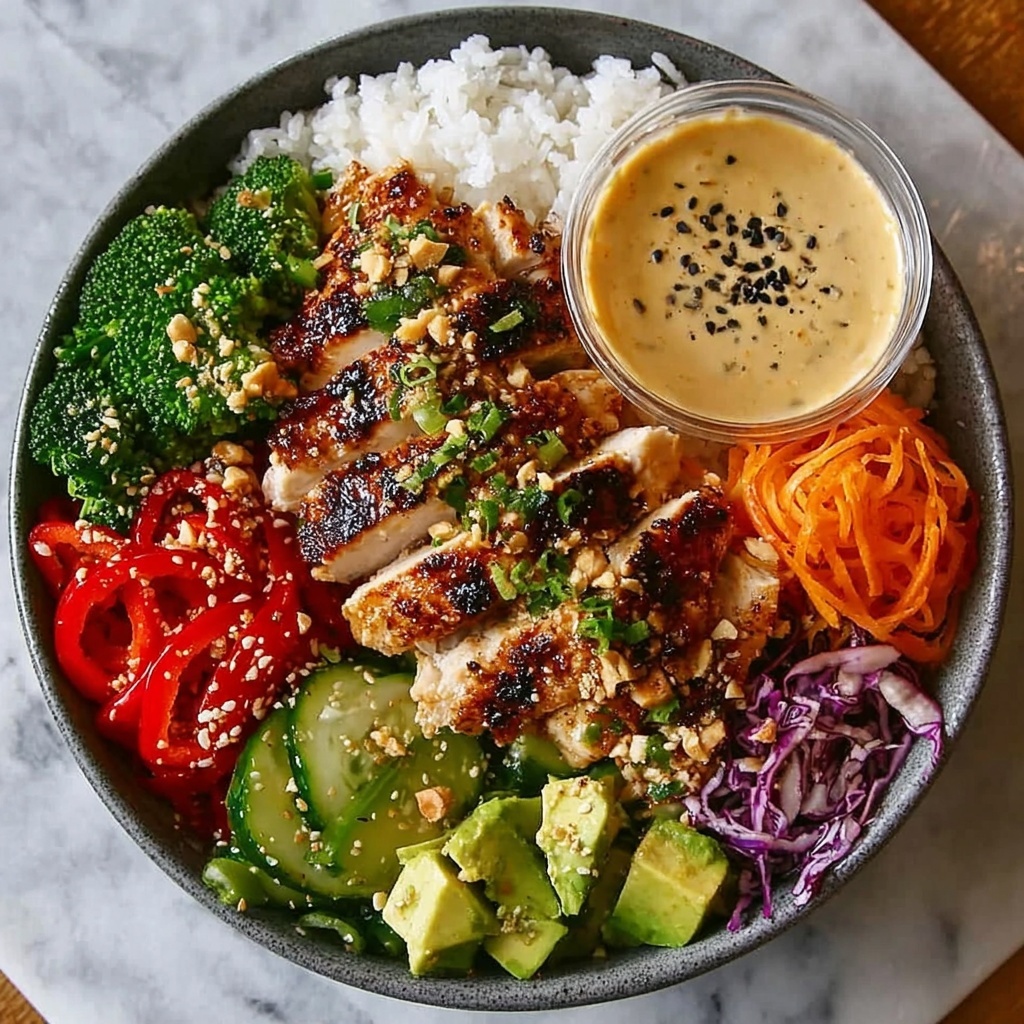
There is something incredibly satisfying about a bowl loaded with vibrant colors, bold flavors, and fresh textures, and that is exactly what the Thai Peanut Chicken Buddha Bowl Recipe delivers. This dish masterfully balances tender, marinated chicken with a creamy, tangy peanut sauce, all nestled atop wholesome grains and fresh veggies that bring crunch and brightness. Every bite is a delicious journey through sweet, spicy, savory, and tangy notes that feel both comforting and invigorating. If you’re craving a bowl that’s as nourishing as it is colorful, this recipe is an absolute game-changer you’ll want to make again and again.
Ingredients You’ll Need
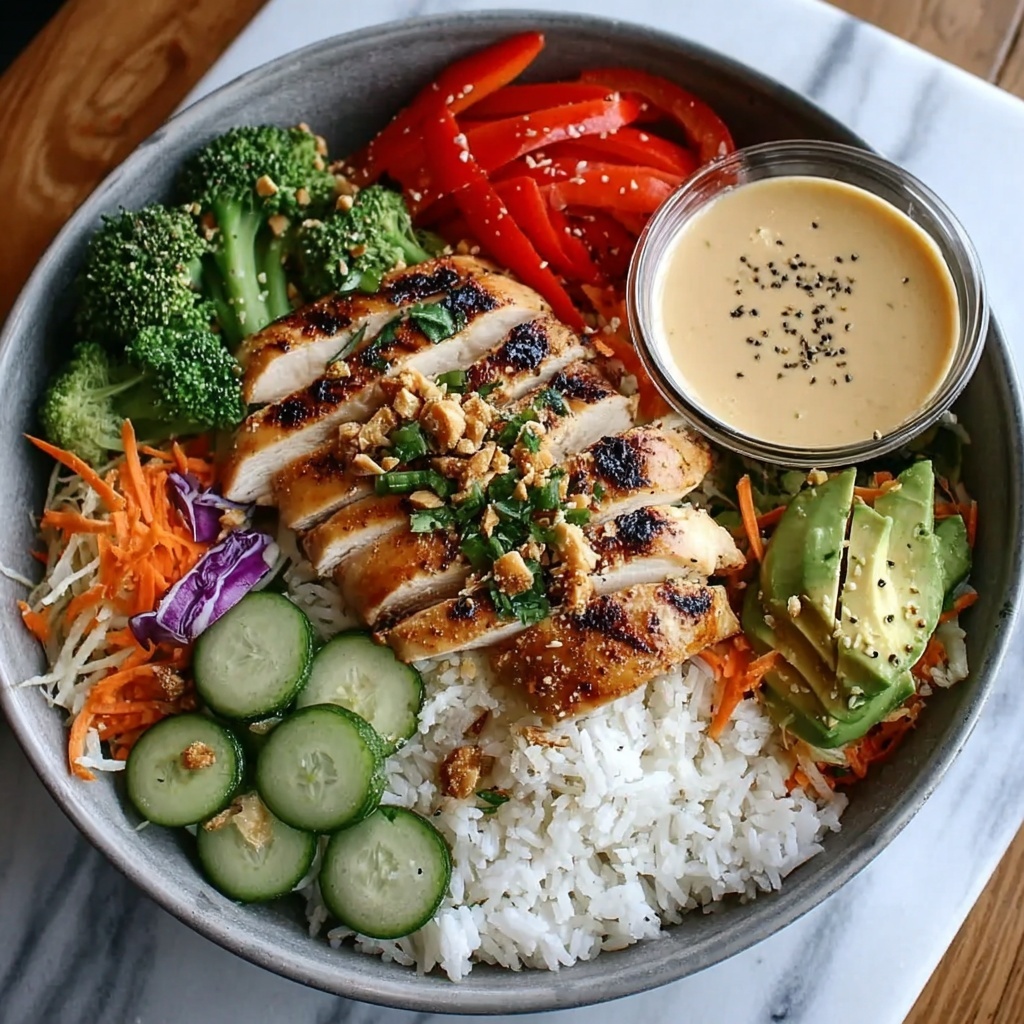
Gathering simple, fresh ingredients is the key to making this Thai Peanut Chicken Buddha Bowl Recipe come alive. Each component plays a special role, from the aromatic marinade on the chicken to the crisp, colorful vegetables, creating a perfect harmony of texture and flavor.
- Boneless, skinless chicken: Use breasts or thighs cut into bite-sized strips for juicy, flavorful protein.
- Soy sauce or tamari: Adds salty depth with a hint of umami; tamari keeps it gluten-free.
- Lime juice: Brings a bright, citrusy note that lifts the entire dish.
- Neutral oil and sesame oil: Blend these for a perfect cooking medium and that subtle nutty aroma.
- Garlic and ginger: Fresh spices that infuse warmth and complexity.
- Ground coriander and paprika: Optional but fantastic for a hint of earthiness and smoky undertones.
- Peanut butter: The star of the sauce, creamy and rich, pairing beautifully with the rest.
- Honey or maple syrup: Balances tangy and spicy with a touch of natural sweetness.
- Rice vinegar and sriracha: Offers acidity and heat to punch up the sauce.
- Cooked brown rice, jasmine rice, or quinoa: Provides a warm, hearty base with subtle texture differences.
- Shredded cabbage, carrots, red bell pepper, cucumber: Fresh and crunchy vegetables that brighten every bite.
- Steamed edamame or broccoli: Adds plant-based protein and color.
- Avocado: Creamy and cooling, a lovely contrast to the spiced chicken and peanut sauce.
- Fresh herbs and garnishes: Cilantro, green onions, roasted peanuts, and sesame seeds bring freshness and an irresistible crunch.
How to Make Thai Peanut Chicken Buddha Bowl Recipe
Step 1: Marinate the Chicken
Start by tossing your bite-sized chicken pieces in a mixture of soy sauce, lime juice, neutral and sesame oils, minced garlic, freshly grated ginger, and warming spices like coriander and paprika. This marinade is where the magic begins—every strip gets infused with layers of flavor that will shine through after cooking. Cover the bowl and let it rest for at least 15–20 minutes, or longer if you want those flavors to intensify.
Step 2: Cook the Grains
While the chicken marinates, prepare your base by cooking brown rice, jasmine rice, or quinoa according to the package instructions. Fluff the grains with a fork once done and keep them warm covered. A quick squeeze of lime and pinch of salt on the hot rice can add a subtle flavor lift that ties it beautifully to the rest of the bowl.
Step 3: Prep the Vegetables and Toppings
Next, get your veggies ready—shred the cabbage and carrots, slice the bell pepper and cucumber thinly, and steam edamame or broccoli just until tender-crisp. Keep your avocado fresh by slicing it right before assembly to prevent browning. Also, chop up your green onions, cilantro, and roasted peanuts as these will add the perfect finishing touches both visually and in flavor.
Step 4: Whisk Together the Peanut Sauce
This sauce is the heart of the Thai Peanut Chicken Buddha Bowl Recipe. Combine creamy peanut butter, soy sauce, lime juice, honey or maple syrup, rice vinegar, spicy sriracha, minced garlic, and fresh ginger. Whisk the ingredients smooth, then gradually stir in warm water until you reach a luscious yet pourable consistency. Don’t be shy to adjust lime, sweetness, salt, or spice until it sings perfectly to your taste buds!
Step 5: Cook the Chicken
Heat a skillet over medium-high heat, add a touch of oil if necessary, and cook the marinated chicken strips in a single layer to get nice color and caramelization. Let each side cook undisturbed for a few minutes before flipping. During the final moments of cooking, toss the chicken with a few spoonfuls of the peanut sauce to glaze it beautifully. Once cooked through and golden, allow the chicken to rest briefly off the heat.
Step 6: Assemble the Buddha Bowls
Finally, build your bowls with warm grains as the base, then artfully arrange the vibrant shredded cabbage, carrots, bell pepper, cucumber, and steamed veggies in sections. Add creamy avocado and top with the warm, sauced chicken. Finish with a generous drizzle of the peanut sauce and scatter the chopped peanuts, green onions, cilantro, and sesame seeds over each bowl. Serve with lime wedges and extra sriracha for those who love a little more zing.
How to Serve Thai Peanut Chicken Buddha Bowl Recipe
Garnishes
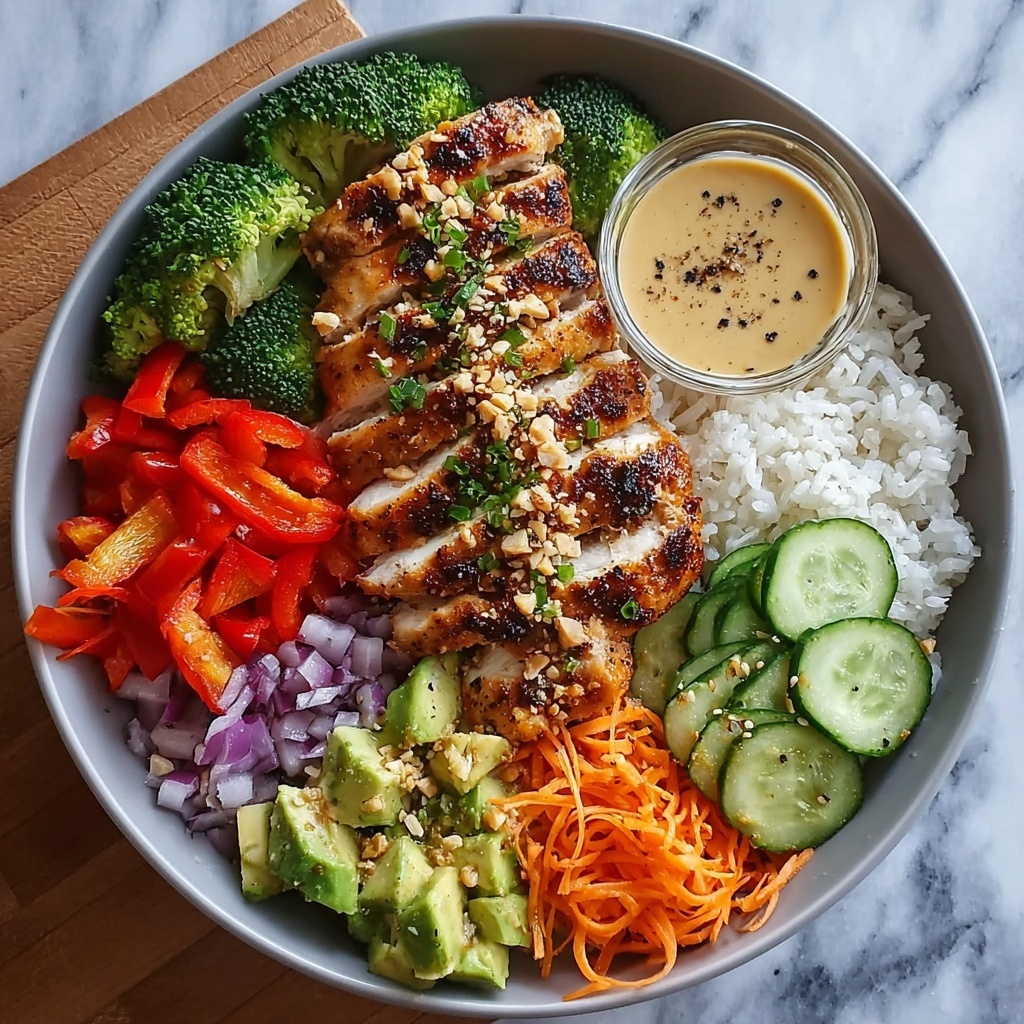
Fresh cilantro, crunchy roasted peanuts, and toasted sesame seeds are essential for that authentic touch, adding texture and bursts of herbal brightness. Don’t forget the lime wedges to squeeze on at the table for an uplifting citrus brightness that cuts through the richness of the peanut sauce.
Side Dishes
This Buddha bowl shines as a stand-alone meal, but you might enjoy pairing it with light, refreshing sides like a crisp cucumber salad or simple spring rolls to complement the flavors without overwhelming them. A cold Thai iced tea also makes a perfect beverage partner to balance the subtle heat.
Creative Ways to Present
For a stunning presentation, layer your bowl ingredients in separate sections, creating a rainbow of colors that makes it almost too beautiful to eat. Alternatively, stack the veggies and chicken on top of the rice for a more casual, mixed approach. Using glass or clear bowls can also showcase the vibrant layers, making it a gorgeous centerpiece at any meal.
Make Ahead and Storage
Storing Leftovers
Leftover Thai Peanut Chicken Buddha Bowl Recipe components store well separately. Keep cooked chicken and grains in airtight containers in the fridge for up to 3–4 days. Store fresh veggies like cucumber and avocado separately to maintain their crispness and avoid sogginess.
Freezing
While the cooked chicken and grains freeze well, fresh vegetables and avocado do not. For best results, freeze only the cooked chicken and rice or quinoa in portioned containers. Thaw overnight in the refrigerator and reheat gently when ready to enjoy.
Reheating
Reheat the chicken and grains in a skillet over medium heat or in the microwave until warmed through. Add a splash of water or a little extra peanut sauce to keep things moist. Add fresh vegetables, avocado, and garnishes after reheating for the freshest flavor and texture.
FAQs
Can I use chicken thighs instead of breasts?
Absolutely! Chicken thighs are actually fantastic for this recipe because they stay juicy and tender, absorbing the marinade beautifully. You can use either breasts or thighs based on your preference.
Is there a vegetarian version of this Buddha bowl?
Yes! Swap the chicken for tofu, tempeh, or chickpeas, and you’ll still have plenty of protein and delicious flavor. Simply marinate and cook the tofu or tempeh the same way you do the chicken.
How can I make the peanut sauce less spicy?
If you prefer a milder sauce, reduce or omit the sriracha or chili garlic sauce. You can always add a little bit at a time to reach your desired heat level while maintaining the creamy, tangy balance.
What grains work best for this recipe?
Brown rice, jasmine rice, and quinoa all make excellent bases for the bowl. Choose your favorite or what you have on hand—each adds its unique texture and subtle flavor.
Can I prepare this recipe in advance for meal prep?
Definitely! Cook and store the chicken, rice, and sturdy veggies in airtight containers. Keep soft ingredients like avocado, fresh herbs, and sauce separate until ready to eat to maintain freshness and texture.
Final Thoughts
This Thai Peanut Chicken Buddha Bowl Recipe is truly a celebration of flavor, texture, and color all in one bowl. It’s nourishing, vibrant, and so comforting at the same time, making it a favorite to reach for on busy weeknights or for meal prepping. I can’t wait for you to try it and experience how effortlessly delicious eating well can be!
“`
Print
Thai Peanut Chicken Buddha Bowl Recipe
- Prep Time: 20 minutes
- Cook Time: 30 minutes
- Total Time: 50 minutes
- Yield: 3 to 4 servings
- Category: Main Dish
- Method: Frying
- Cuisine: Thai
- Diet: Gluten Free
Description
A vibrant and flavorful Thai Peanut Chicken Buddha Bowl featuring marinated and pan-cooked chicken served over a base of brown rice or quinoa with fresh vegetables and a creamy peanut sauce. This wholesome bowl offers a balance of sweet, spicy, and tangy flavors with a nutty richness, making it perfect for a healthy lunch or dinner.
Ingredients
For the chicken:
- 1 lb (450 g) boneless, skinless chicken breasts or thighs, cut into bite-sized strips
- 1 tbsp soy sauce (or tamari for gluten-free)
- 1 tbsp lime juice
- 1 tbsp neutral oil (canola, avocado, or vegetable)
- 1 tsp sesame oil
- 2 cloves garlic, minced
- 1 tsp fresh ginger, finely grated
- 1/2 tsp ground coriander (optional)
- 1/2 tsp smoked or sweet paprika
- 1/4 tsp black pepper
- 1/2 tsp salt (adjust to taste)
For the peanut sauce:
- 1/3 cup creamy peanut butter
- 2 tbsp soy sauce (or tamari for gluten-free)
- 1 –2 tbsp lime juice (to taste)
- 1 –2 tbsp honey or maple syrup (to taste)
- 1 tbsp rice vinegar (or extra lime juice)
- 1 –2 tsp sriracha or chili garlic sauce (adjust to desired spice level)
- 1 clove garlic, finely minced or grated
- 1 tsp fresh ginger, finely grated
- 3 –5 tbsp warm water, to thin as needed
- 1 tsp sesame oil (optional, for extra flavor)
For the base and vegetables:
- 2 cups cooked brown rice, jasmine rice, or quinoa
- 1 cup shredded purple cabbage (or green cabbage)
- 1 cup shredded carrots (or matchstick-cut)
- 1 red bell pepper, thinly sliced
- 1 small cucumber, halved and thinly sliced
- 1 cup lightly steamed or microwaved edamame (shelled), peas, or broccoli florets
- 1 avocado, sliced or cubed
- 2 –3 green onions, thinly sliced
For garnish and serving:
- 1/4 cup roasted peanuts, roughly chopped
- Small handful fresh cilantro leaves, roughly chopped
- Lime wedges, for serving
- Toasted sesame seeds (optional)
- Extra sriracha or chili sauce, for drizzling (optional)
Instructions
- Marinate the chicken:
Place the chicken strips in a medium bowl. Add soy sauce, lime juice, neutral oil, sesame oil, minced garlic, grated ginger, ground coriander, paprika, black pepper, and salt. Toss well to coat all pieces evenly. Cover and let marinate for at least 15–20 minutes at room temperature, or up to 4 hours in the refrigerator for deeper flavor. - Prepare the base (rice or grains):
If you do not already have cooked rice or quinoa, start cooking it now according to package instructions. When done, fluff with a fork and set aside, covered, to keep warm. For extra flavor, you can season the warm rice with a pinch of salt and a squeeze of lime juice. - Prep the vegetables and toppings:
Shred the cabbage and carrots (or cut into thin matchsticks). Thinly slice the red bell pepper and cucumber. Steam or microwave edamame, peas, or broccoli just until bright and tender-crisp; season lightly with salt. Slice or cube the avocado just before assembling to prevent browning. Slice the green onions and roughly chop the cilantro. Roughly chop the roasted peanuts. - Make the Thai-inspired peanut sauce:
In a medium bowl, add peanut butter, soy sauce, lime juice, honey or maple syrup, rice vinegar, sriracha or chili garlic sauce, minced garlic, grated ginger, and sesame oil (if using). Whisk until the mixture is thick and smooth. Add warm water 1 tablespoon at a time, whisking after each addition, until you reach a smooth, pourable consistency that still coats a spoon (typically 3–5 tablespoons). Taste and adjust by adding more lime, sweetener, soy sauce, or sriracha as desired. - Cook the chicken:
Heat a large skillet or nonstick pan over medium-high heat. When hot, add a small drizzle of oil if needed. Add the marinated chicken in a single layer, shaking off excess marinade to avoid overcrowding and steaming. Cook without moving for 2–3 minutes to develop some color; then flip and continue cooking for another 3–5 minutes, stirring occasionally, until the chicken is cooked through and lightly browned at the edges (internal temperature should reach 165°F / 74°C). Optional: During the last 1–2 minutes, add 2–3 tablespoons of the peanut sauce and toss to glaze the chicken. Remove from heat and let rest a couple of minutes. - Assemble the Buddha bowls:
Divide the warm rice or quinoa among 3–4 serving bowls. Arrange the shredded cabbage, carrots, bell pepper, cucumber, and edamame (or other veggies) in separate sections around each bowl to create a colorful, composed look. Add sliced or cubed avocado to each bowl. Top each bowl with a generous portion of the cooked chicken. - Add sauce and garnishes:
Drizzle each bowl with a generous amount of the peanut sauce. You can serve extra sauce on the side for those who want more. Sprinkle with chopped peanuts, green onions, cilantro, and toasted sesame seeds if using. Serve with lime wedges and extra sriracha for added brightness and heat. - For meal prep:
If preparing for lunches, divide the rice, chicken, and sturdy veggies (cabbage, carrots, bell pepper, edamame) into airtight containers. Pack avocado, peanut sauce, green onions, cilantro, and cucumber separately and add them just before eating to keep everything fresh. The cooked chicken and grains will usually keep well in the refrigerator for up to 3–4 days.
Notes
- Marinate the chicken for at least 15–20 minutes to enhance flavor, but longer (up to 4 hours) yields a deeper taste.
- Use tamari instead of soy sauce for a gluten-free option.
- Adjust sriracha or chili sauce to control the heat level in the peanut sauce and dish.
- Slice or cube avocado just before serving to prevent browning.
- Cook rice or quinoa ahead of time to save prep time.
- For meal prep, keep fresh ingredients separate to maintain texture and flavor.
- Use neutral oils like canola or avocado oil for cooking to avoid overpowering flavors.
- If desired, add toasted sesame seeds as a garnish for extra flavor and crunch.