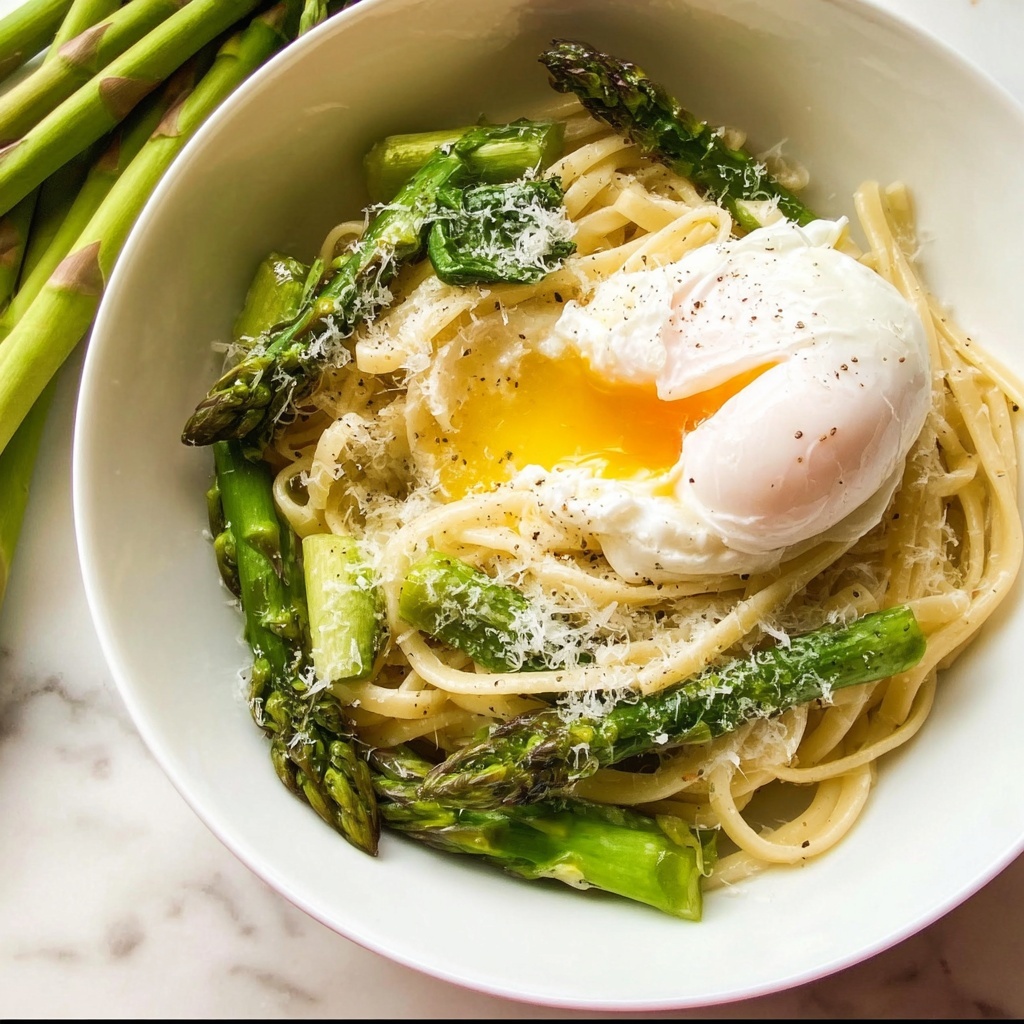
If you’re looking for a dish that brings together fresh spring flavors with comfort and a touch of elegance, this Asparagus and Poached Egg Pasta Recipe is exactly what you need. It’s all about perfectly tender pasta, crisp asparagus, and that glorious runny egg yolk that turns everything into a silky sauce. Simple ingredients come together quickly, making this a perfect weeknight dinner or a special meal to impress without any fuss. From the crunch of the asparagus to the creamy richness of the poached eggs, every bite feels like a cozy celebration of seasonal goodness.
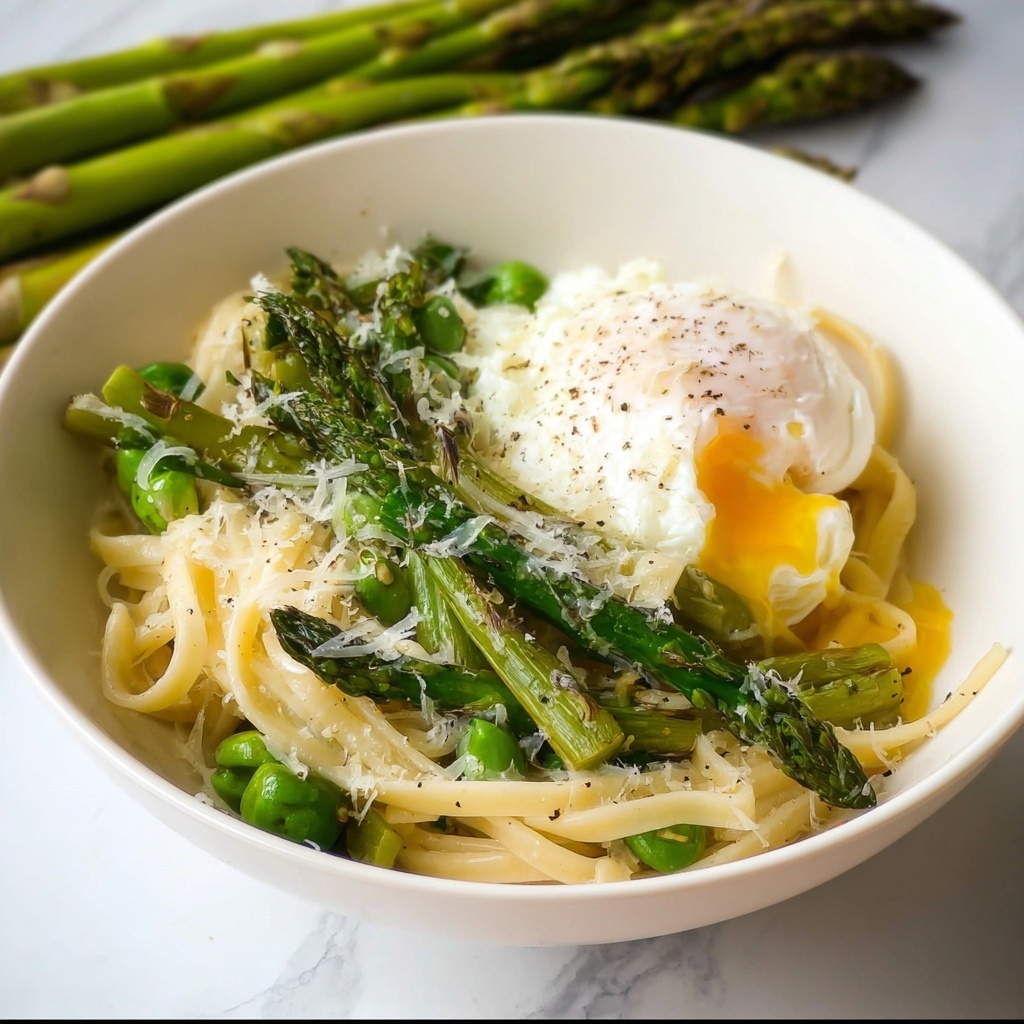
Ingredients You’ll Need
These ingredients are straightforward but pack a punch in flavor and texture. Each one is essential to getting that perfect balance between freshness, creaminess, and savory depth that makes this dish unforgettable.
- 8 ounces pasta: Choose your favorite type—spaghetti, linguine, or fettuccine work beautifully to catch the sauce.
- 2 bunches asparagus: Medium-sized, with tough ends snapped off for the freshest bite and vibrant green color.
- 4 large eggs: Fresh eggs make all the difference when poaching to get that silky yolk.
- Kosher salt and fresh pepper: The basics that enhance every flavor layer and bring the whole dish together.
- 2 tablespoons parmesan: Freshly shaved or grated adds that salty, nutty finish that’s irresistible.
How to Make Asparagus and Poached Egg Pasta Recipe
Step 1: Prepare the Asparagus
Start by cutting your asparagus into one-inch pieces, at a slight angle to not only look pretty but also help with even cooking. Snapping off the tough ends ensures every bite is tender and delicious.
Step 2: Cook Pasta and Asparagus
Bring a large pot of salted water to a roaring boil. Cook the pasta following the package instructions until al dente, usually a couple of minutes shy of fully done. Two minutes before the pasta is ready, add the asparagus to the boiling water. This technique softly steams the asparagus so it stays bright and crisp-tender. Don’t forget to reserve about a cup of the pasta water before draining; this starchy liquid will help marry the flavors perfectly later.
Step 3: Poach the Eggs
While the pasta water is coming to a boil, get those eggs ready to poach. If you’re lucky to have an egg poacher, use it for foolproof results. Otherwise, a gentle traditional poach in simmering water or even the sous vide method will work brilliantly. The goal is tender whites with luscious, runny yolks that transform the pasta into a creamy dish.
Step 4: Keep Poached Eggs Warm
As soon as the eggs are done, scoop them out carefully with a slotted spoon. Cover them to keep warm while you finish up the pasta. Leaving them in a warm spot or even gently covered is key to avoiding cold eggs on your final plate.
Step 5: Combine Pasta and Reserved Water
Return the drained pasta and asparagus to the pot. Pour in a little of that reserved pasta water, adding it gradually until you get a silky, glossy consistency that lightly coats each strand. This step unlocks the perfect texture and mouthfeel that makes this Asparagus and Poached Egg Pasta Recipe so comforting.
Step 6: Plate and Garnish
Divide the pasta between bowls. Nestle a poached egg on top of each serving, sprinkle generously with parmesan cheese, and season with freshly cracked pepper and kosher salt to taste. To eat, break the yolk and mix it gently into the pasta for a luscious, sauce-like finish. Trust me—you’ll want to add extra cheese at this point because why not?
How to Serve Asparagus and Poached Egg Pasta Recipe
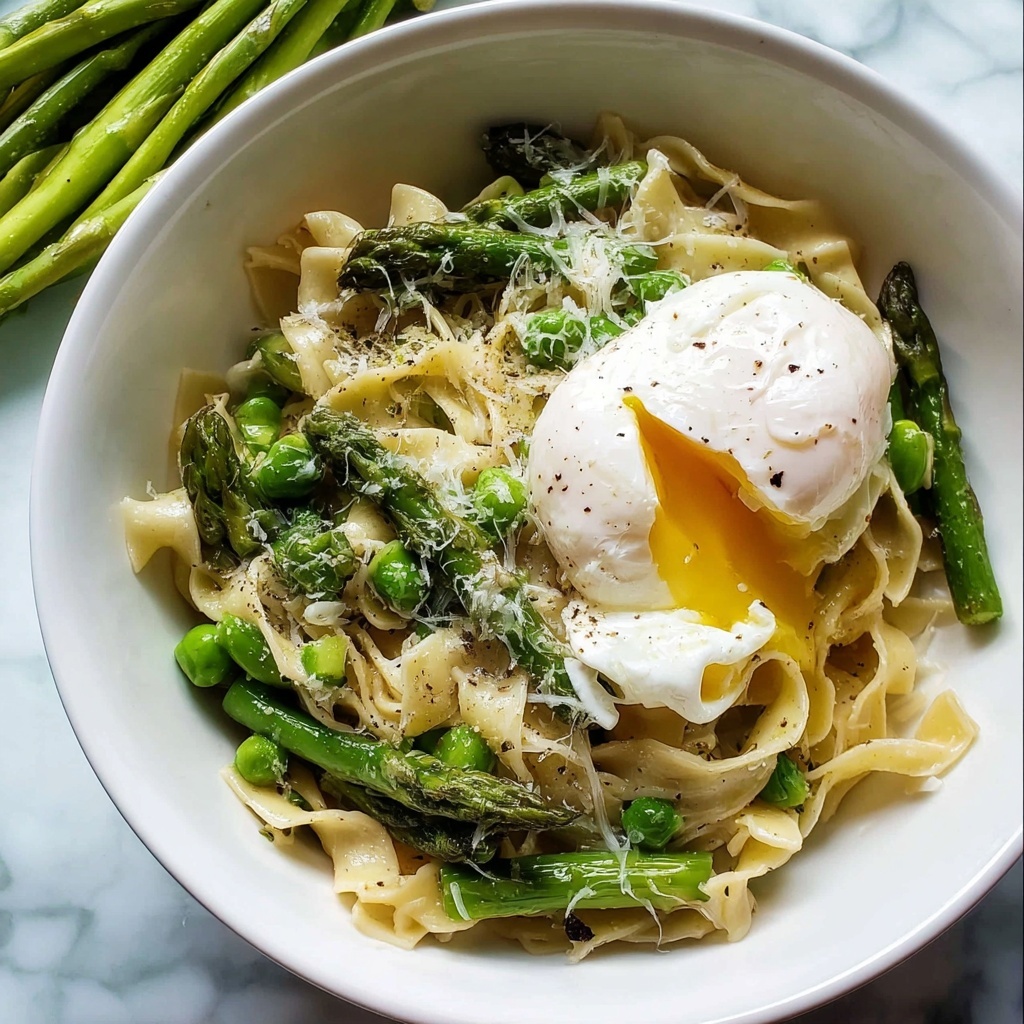
Garnishes
The beauty of this dish shines through simple garnishes. Freshly cracked black pepper adds a subtle kick, while a touch more parmesan awakens the flavors. If you’re feeling adventurous, a sprinkle of red pepper flakes or a twist of lemon zest will bring an extra layer of brightness that complements the asparagus perfectly.
Side Dishes
This pasta pairs wonderfully with a crisp green salad tossed in a light vinaigrette to balance the creaminess. Garlic bread or a crusty baguette is fantastic for soaking up every bit of that silky egg sauce. For a heartier option, roasted chicken or grilled shrimp can turn this meal into a satisfying feast.
Creative Ways to Present
Want to impress your guests or just feel a bit fancy at home? Serve the pasta in shallow bowls to show off the vibrant green asparagus and the perfectly poached egg perched on top. You could also drizzle a little good olive oil or a dollop of herb-infused ricotta for a gourmet touch. Presentation matters and makes this Asparagus and Poached Egg Pasta Recipe that much more special.
Make Ahead and Storage
Storing Leftovers
If you have leftovers (and it’s totally possible because this recipe makes a generous four servings), store the pasta and asparagus separately from the poached eggs in airtight containers in the refrigerator. This helps preserve their distinct textures and makes reheating way easier without turning the eggs rubbery.
Freezing
This dish is best enjoyed fresh, especially because of the delicate poached eggs and bright asparagus. Freezing is not recommended as these components lose their texture and flavor when frozen and reheated.
Reheating
When reheating your leftover pasta and asparagus, do it gently in a skillet or microwave with a splash of water to loosen the sauce. It’s best to poach fresh eggs instead of reheating the saved ones to keep that perfect silky yolk that truly makes this Asparagus and Poached Egg Pasta Recipe shine.
FAQs
Can I use frozen asparagus for this recipe?
While fresh asparagus is ideal for texture and flavor, frozen can work in a pinch. Just be sure to thaw and drain it well before adding to avoid excess water diluting your pasta.
How do I know when my pasta is al dente?
Al dente means the pasta is cooked through but still has a slight bite to it—not mushy. Taste it a minute or two before the suggested cooking time on the package to check for your preferred firmness.
What’s the best method for poaching eggs at home?
If you don’t have an egg poacher, the traditional method of cracking eggs into gently simmering water with a splash of vinegar works wonders. Keep the water just below a boil to avoid breaking the whites.
Can I add other vegetables to this recipe?
Absolutely! Peas, cherry tomatoes, or thinly sliced zucchini would all blend nicely with the asparagus and add some new flavors and textures while keeping the dish light and fresh.
Is this recipe suitable for a vegetarian diet?
Yes, this dish is naturally vegetarian. Just be sure to verify your parmesan is made without animal rennet if you want to keep it strictly vegetarian-friendly.
Final Thoughts
I promise once you try this Asparagus and Poached Egg Pasta Recipe, you’ll keep coming back for more. It’s a dish that feels elegant without any fuss, celebrates fresh ingredients, and is deeply satisfying. Perfect for any season, it’s a wonderful way to bring simple, wholesome flavors to your table. So roll up your sleeves, gather those ingredients, and enjoy every silky, savory forkful!
Print
Asparagus and Poached Egg Pasta Recipe
- Prep Time: 10 minutes
- Cook Time: 10 minutes
- Total Time: 20 minutes
- Yield: 4 servings
- Category: Main Course
- Method: Stovetop
- Cuisine: Italian
- Diet: Vegetarian
Description
A light and elegant dish featuring perfectly cooked asparagus and al dente pasta topped with delicately poached eggs and freshly shaved parmesan. This simple yet sophisticated recipe combines fresh spring vegetables with creamy yolks and a touch of cheese to create a comforting meal ideal for brunch or a quick dinner.
Ingredients
Pasta and Vegetables
- 8 ounces pasta (uncooked)
- 2 bunches asparagus (medium, tough ends snapped off, about 4 cups)
- Kosher salt, to taste
- Freshly ground black pepper, to taste
Eggs and Cheese
- 4 large eggs
- 2 tablespoons parmesan (freshly shaved or grated, or to taste)
Instructions
- Prepare Asparagus: Cut the asparagus into one-inch pieces, slicing them at an angle to increase surface area and enhance texture.
- Cook Pasta and Asparagus: Bring a large pot of salted water to a boil. Add the pasta and cook according to package instructions until al dente. Two minutes before the pasta is done, add the asparagus pieces to the boiling water to cook them lightly. Reserve 1 cup of the pasta cooking water, then drain both pasta and asparagus in a colander.
- Poach Eggs: While the pasta water is boiling, poach the eggs using an egg poacher if available, or use a sous vide method. Alternatively, poach traditionally by simmering eggs in gently boiling water until whites are set but yolks remain runny.
- Keep Eggs Warm: Remove poached eggs from the water using a slotted spoon and cover them or place in warm water to keep at serving temperature until plating.
- Combine and Plate: Return the drained pasta and asparagus to the pot. Add some reserved pasta water as needed to moisten and create a light sauce. Divide the mixture evenly among four bowls. Top each serving with a poached egg, a sprinkle of shaved or grated parmesan, and freshly ground black pepper and kosher salt to taste.
- Serve: At the table, break the egg yolk and mix it with the pasta and asparagus to create a creamy sauce. Add additional parmesan if desired for extra flavor.
Notes
- You can cook the asparagus using other methods like roasting or sautéing if preferred.
- Reserve pasta water is key to adjusting the sauce consistency.
- Using fresh parmesan enhances the flavor and texture of the dish.
- Poaching eggs gently is important to maintain an intact white and runny yolk for the best texture.
- This dish is best enjoyed immediately after plating for optimal flavor and texture.