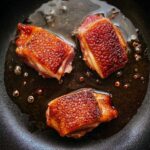
Description
This recipe guides you through cooking a perfectly crispy skin duck breast with tender, juicy meat. Using a combination of stovetop pan cooking and oven finishing ensures a golden, crackling skin and succulent interior, with detailed tips for scoring and seasoning to maximize flavor and texture.
Ingredients
Scale
Duck Breast
- 1 duck breast, boneless, skin on
- 1/8 tsp cooking salt or kosher salt
- Pinch white pepper (or finely ground black pepper as substitute)
Instructions
- Preheat the Oven: Set your oven to 180°C/350°F (160°C fan-forced) to prepare for finishing the duck breast after stovetop cooking.
- Score and Season: Sprinkle half of the salt and pepper onto the flesh side of the duck breast. Using a sharp knife, make 5 or 6 diagonal cuts on the skin side only, being careful not to pierce the flesh or cut through the skin to the edges. Pat the skin dry thoroughly with paper towels, then sprinkle the remaining salt and pepper evenly over the skin.
- Place in Cold Pan Without Oil: Use an oven-proof pan and place the duck breast skin-side down while the pan is still cold. Do not add any oil as the skin will render its own fat. Lightly weigh down the duck with another pan to keep the skin flat and in contact with the pan surface.
- Cook Skin Side on Stove: Turn the heat to medium low and cook for about 10 minutes. During this time, the skin will render fat and become golden and crispy. Avoid moving the duck to ensure even crisping.
- Flip and Oven Finish: Flip the duck breast to the flesh side and cook for 1 minute on the stovetop. Then transfer the pan directly to the preheated oven. Cook for 6 minutes for medium rare (internal temp 54°C/130°F) or 8 minutes for medium (60°C/140°F), according to your preference.
- Rest Before Serving: Remove the pan from the oven and transfer the duck breast to a rack or plate. Let it rest for 5 minutes to allow juices to redistribute. Serve the breast whole or slice it as desired.
Notes
- Note 1: Ensure the duck breast is boneless with skin on to achieve the best crispiness and even cooking.
- Note 2: Scoring the skin helps fat render evenly and prevents the skin from shrinking during cooking.
- Note 3: Using a cold pan and no added oil allows the duck to cook slowly in its own fat, minimizing splatter and promoting crispiness.
- Note 4: Cooking at medium low heat is essential for gradual fat render and crisp skin without burning.