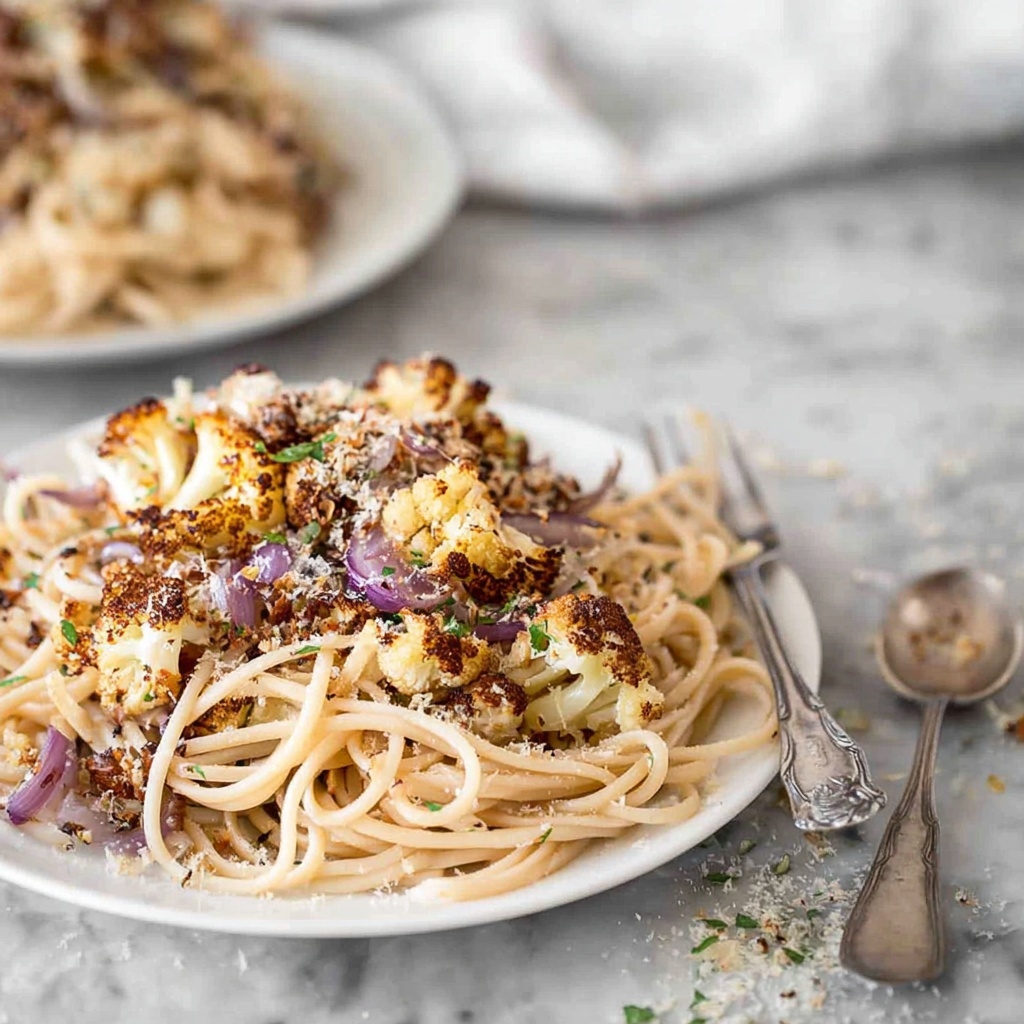
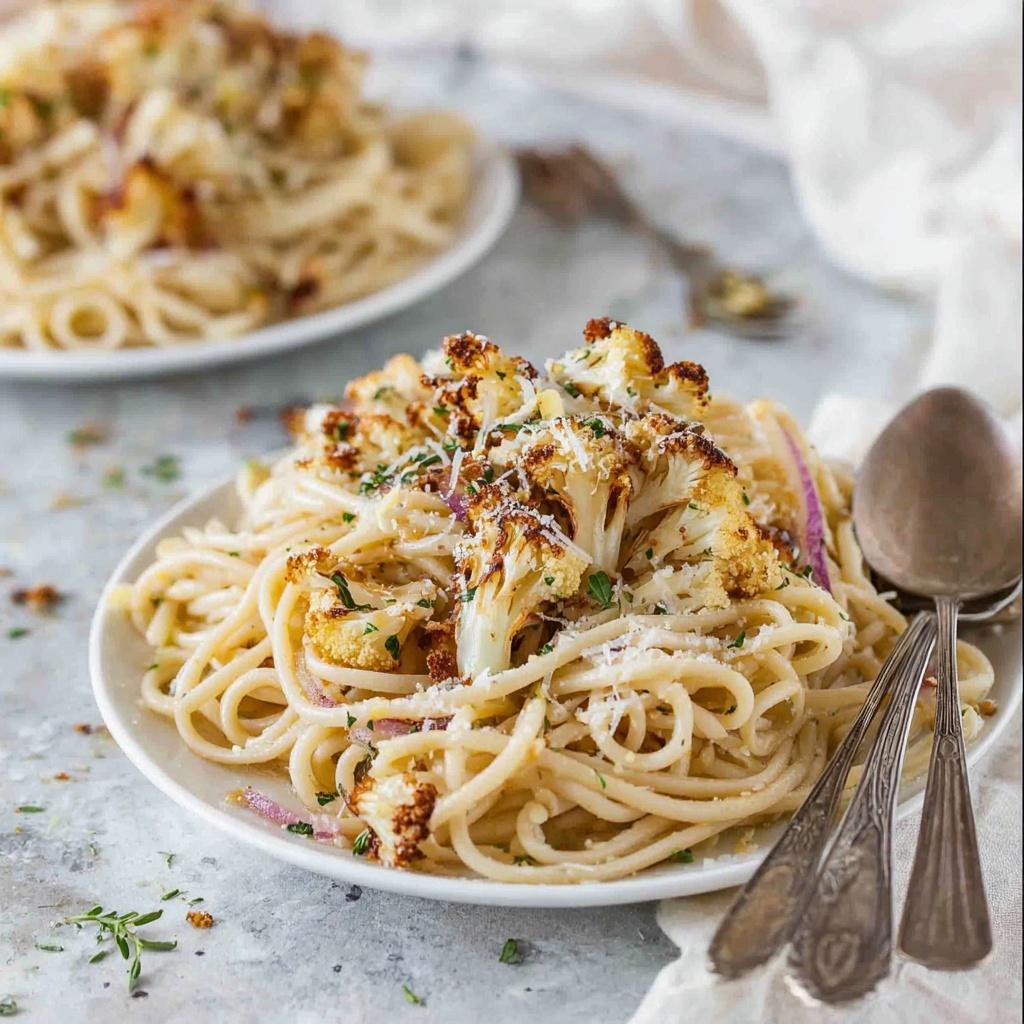
If you are craving a dish that’s bursting with flavor, texture, and just the right hint of indulgence, look no further than this Garlic Butter Cauliflower Pasta with Pangritata Recipe. It’s a delightful way to transform humble cauliflower and pantry staples into a luscious, comforting pasta meal that feels both sophisticated and entirely approachable. The golden, crispy pangritata adds an irresistible crunch while the garlic butter sauce ties everything together, creating a vibrant and satisfying plate you will want to make again and again.
Ingredients You’ll Need
This recipe relies on simple, accessible ingredients that each play a crucial role in bringing the dish to life. From the nutty, toasted pangritata to the bright lemon zest, every element contributes beautifully to the overall flavor, texture, and color.
- Bread slices (1 to 2, crusts removed, preferably stale): Perfect for making crispy pangritata that adds texture and a toasty flavor.
- Olive oil spray: Helps to lightly crisp the pangritata without excess fat.
- Unsalted butter (2 tbsp): Creates the rich, silky base of the sauce that coats the pasta and cauliflower.
- Olive oil (1 tbsp): Adds a fruity depth and helps sauté garlic and veggies evenly.
- Garlic cloves (2, smashed): Infuses the dish with irresistible aroma and flavor.
- Cauliflower florets (about 4 to 5 cups): The star vegetable, roasted to tender perfection for a satisfying bite.
- Fettuccine (8 oz / 250 g): Your pasta base that provides a silky texture and the perfect canvas for the sauce.
- Red onion (1/2, thinly sliced): Adds sweetness and a subtle crunch to balance the garlic and butter.
- Red chili flakes (1/2 to 1 tsp): Bring a gentle heat that awakens the senses.
- Lemon (1, juice and zest): Brightens the dish with acidity and freshness.
- Salt and pepper: Essential seasonings to enhance all the flavors.
- Parmesan cheese (freshly grated): Adds a savory, nutty depth and creamy texture.
- Fresh parsley (optional, finely chopped): A pop of color and fresh herbal note to finish.
How to Make Garlic Butter Cauliflower Pasta with Pangritata Recipe
Step 1: Prepare the Pangritata
Begin by toasting the bread slices to make your pangritata. Tear the bread into coarse crumbs and spray them lightly with olive oil to help them crisp up nicely in a hot skillet. Cook until golden and crunchy, stirring frequently to avoid burning. This crispy topping will add a delightful texture contrast to your creamy pasta.
Step 2: Cook the Pasta and Cauliflower
While your pangritata is coming together, bring a large pot of salted water to boil and cook the fettuccine according to package instructions until al dente. Drain and set aside, reserving a cup of pasta water. Meanwhile, steam or blanch the cauliflower florets just until tender but still holding their shape, for that perfect bite in your pasta.
Step 3: Sauté Aromatics and Roast Cauliflower
In a large skillet, melt the unsalted butter with olive oil over medium heat. Add the smashed garlic and thinly sliced red onion, sautéing until fragrant and the onions are softened. Add the cauliflower along with red chili flakes, then cook until lightly browned and roasted-tasting, stirring occasionally to develop those lovely caramelized edges.
Step 4: Combine Pasta and Sauce
Lower the heat and mix the cooked pasta into the skillet with the cauliflower and aromatics. Stir in lemon juice and zest, freshly grated Parmesan, and a splash of reserved pasta water to create a silky, luscious sauce that clings to every strand of fettuccine.
Step 5: Final Seasoning and Serve
Taste and adjust seasoning with salt and pepper. Sprinkle chopped fresh parsley for a bright herbal lift. Plate your pasta generously topped with the warm, crunchy pangritata for a mouthwatering finish.
How to Serve Garlic Butter Cauliflower Pasta with Pangritata Recipe
Garnishes
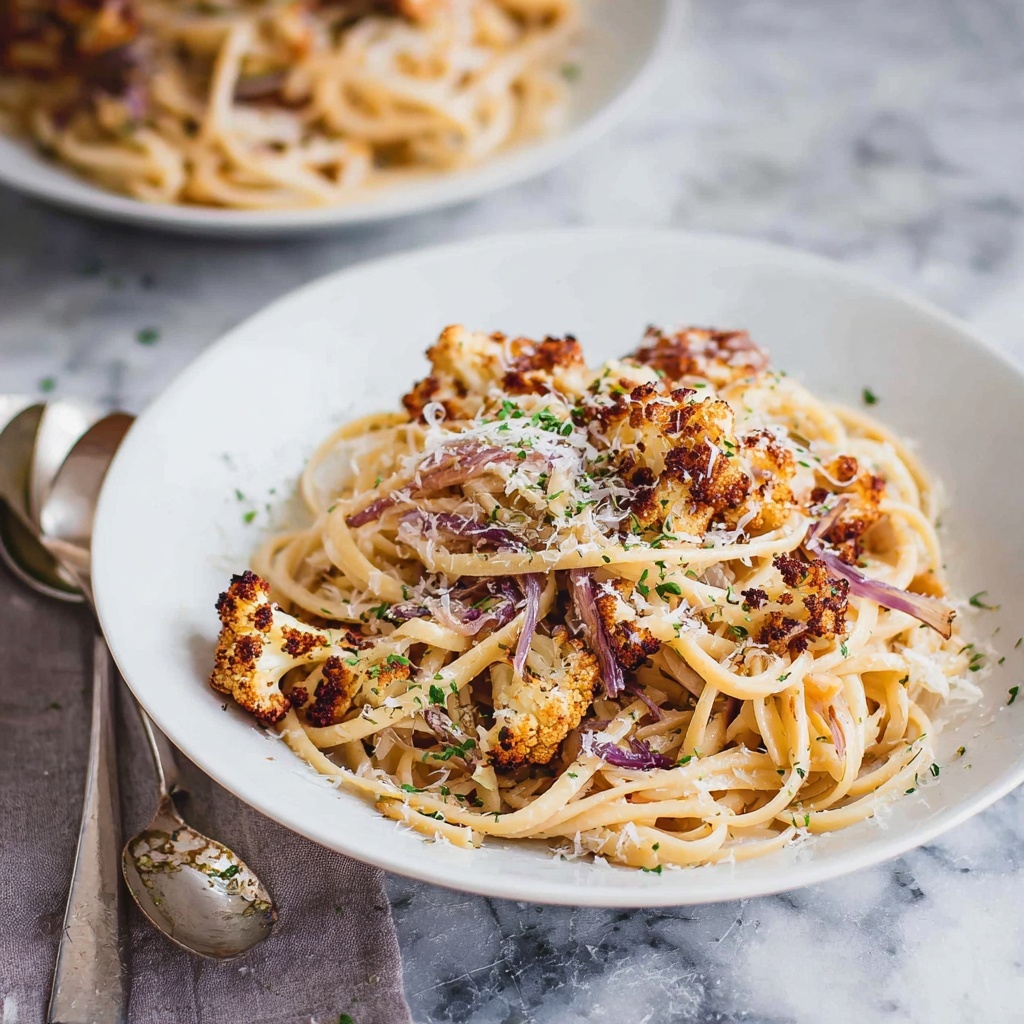
A sprinkle of freshly grated Parmesan, a grind of black pepper, and some vibrant chopped parsley really elevate the dish. If you love a bit more heat, a few extra red chili flakes on top will add a perfect kick. These little touches turn an everyday meal into something truly special.
Side Dishes
This dish is wonderfully satisfying on its own, but if you want to round out your meal, a simple green salad dressed with lemon vinaigrette pairs beautifully. Crispy roasted asparagus or garlic bread can also complement the flavors without overwhelming your taste buds.
Creative Ways to Present
For a fun twist, serve this Garlic Butter Cauliflower Pasta with Pangritata Recipe in individual pasta bowls topped with a lemon wedge to squeeze over at the table. Alternatively, toss in some toasted nuts like pine nuts or walnuts for added crunch and a nutty depth.
Make Ahead and Storage
Storing Leftovers
Store any leftovers in an airtight container in the refrigerator for up to 3 days. The cauliflower and pasta will keep their texture well if stored properly, but be sure to keep pangritata separate to maintain its crispiness.
Freezing
While this pasta is best enjoyed fresh, you can freeze leftovers without the pangritata. Place the pasta and cauliflower mixture in a freezer-safe container and freeze for up to 2 months. Avoid freezing the crispy topping to prevent it from becoming soggy.
Reheating
Reheat gently on the stovetop over low heat with a splash of water or broth to loosen the sauce. Add fresh pangritata just before serving to regain that wonderful crunch. Avoid microwaving if possible, as it can make the cauliflower mushy and the pangritata soggy.
FAQs
Can I use other types of pasta for this Garlic Butter Cauliflower Pasta with Pangritata Recipe?
Absolutely! While fettuccine works beautifully because of its surface area for sauce, you can easily swap in penne, rigatoni, or even spaghetti based on your preference or what you have on hand.
Is this recipe suitable for vegetarians?
Yes, it is vegetarian-friendly as long as you use Parmesan cheese made without animal rennet, or substitute with a vegetarian hard cheese. The dish is packed with vegetable goodness and rich flavors without the need for meat.
How spicy is the dish?
The red chili flakes provide a gentle warmth that can be adjusted to taste. Start with 1/2 teaspoon and increase for more heat, or omit entirely if you prefer a milder flavor.
Can I make the pangritata without bread?
The pangritata is essentially toasted breadcrumbs, so using bread is the easiest method. If you prefer gluten-free, you could try using gluten-free bread or even crushed gluten-free crackers, though texture and flavor might vary.
What does pangritata mean?
Pangritata is an Italian term for toasted breadcrumbs, often used as a crunchy topping to add texture and flavor contrast to pasta dishes. In this recipe, it’s specially spiced to complement the garlic butter and cauliflower.
Final Thoughts
This Garlic Butter Cauliflower Pasta with Pangritata Recipe is a shining example of how simple ingredients, when thoughtfully combined, can create a dish that feels both comforting and gourmet. Every bite delivers a perfect harmony of creamy, crunchy, tangy, and savory notes that will delight your taste buds. Give it a try—you might just find your new favorite weeknight dinner!
Print
Garlic Butter Cauliflower Pasta with Pangritata Recipe
- Prep Time: 10 minutes
- Cook Time: 15 minutes
- Total Time: 25 minutes
- Yield: 3 servings
- Category: Main Dish
- Method: Stovetop
- Cuisine: Italian
- Diet: Vegetarian
Description
A flavorful and comforting Garlic Butter Cauliflower Pasta featuring tender roasted cauliflower florets, a rich garlic butter sauce, and a crunchy pangritata topping made from toasted bread crumbs. Perfect for a quick weeknight meal that’s both satisfying and easy to prepare.
Ingredients
For the Pangritata (Toasted Breadcrumbs)
- 1 to 2 slices bread, crusts removed, preferably stale (enough to make 1/2 cup breadcrumbs)
- Oil spray, preferably olive oil
For the Pasta and Sauce
- 2 tbsp unsalted butter
- 1 tbsp olive oil
- 2 garlic cloves, smashed
- 1/2 large head of cauliflower, broken into florets about 2 inches (5 cm) long (about 4 to 5 cups)
- 8 oz (250 g) fettuccine or pasta of choice
- 1/2 red onion, thinly sliced
- 1/2 to 1 tsp red chili flakes
- 1 lemon, for 2 tbsp lemon juice and zest of 1/2 lemon
- Salt & freshly ground black pepper, to taste
- Parmesan cheese, freshly grated, for serving
- Fresh parsley, finely chopped (optional, for garnish)
Instructions
- Prepare the Pangritata: Tear the bread into small pieces or pulse in a food processor until coarse crumbs form. Lightly spray a non-stick skillet with olive oil and toast the breadcrumbs over medium heat, stirring frequently until golden brown and crispy. Transfer to a bowl and set aside.
- Cook the Pasta: Bring a large pot of salted water to a boil and cook the fettuccine according to package instructions until al dente. Reserve 1/2 cup of pasta water, drain the pasta, and set aside.
- Cook the Cauliflower and Aromatics: While pasta is cooking, heat the olive oil and butter in a large skillet over medium heat. Add the smashed garlic cloves and sliced red onion, sautéing until fragrant and translucent, about 2-3 minutes.
- Add Cauliflower and Chili Flakes: Add the cauliflower florets and red chili flakes to the skillet. Cook, stirring occasionally, until the cauliflower is tender and slightly golden, about 8-10 minutes.
- Combine Pasta and Sauce: Remove the garlic cloves from the skillet. Add the cooked pasta, lemon juice, and lemon zest to the skillet with cauliflower. Toss everything together, adding reserved pasta water a little at a time as needed to create a silky sauce. Season with salt and freshly ground black pepper to taste.
- Serve: Divide the pasta among plates, sprinkle generously with toasted pangritata and freshly grated Parmesan cheese. Garnish with chopped fresh parsley if desired. Serve immediately for the best flavor and texture.
Notes
- Note 1: Smashed garlic cloves provide flavor but are removed before serving to keep the sauce smooth and avoid intense garlic bites.
- Note 2: Using fresh cauliflower florets contributes texture and absorbs the butter-garlic sauce beautifully.
- For a vegan version, substitute butter with olive oil and use nutritional yeast instead of Parmesan.
- You can use any pasta shape you prefer, but wider noodles work best to hold the chunky cauliflower pieces.