Description
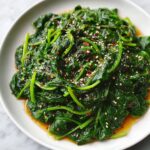
Sigeumchi Namul is a simple and flavorful Korean spinach side dish featuring blanched spinach seasoned with soy sauce, sesame oil, garlic, and toasted sesame seeds. This refreshing banchan is quick to prepare and adds a nutritious, vibrant green element to any Korean meal.
Ingredients
Scale
Spinach
- 1 pound (450 g) fresh spinach, preferably flat-leaf or baby spinach
- 1 tablespoon coarse sea salt (for blanching water)
Seasoning
- 1 ½ teaspoons soy sauce (more to taste; use gluten-free if needed)
- 1 teaspoon sesame oil
- 1 to 1½ teaspoons toasted sesame seeds, lightly crushed
- 1 small garlic clove, very finely minced (about ½ teaspoon; adjust to taste)
- ¼ teaspoon fine sea salt (for seasoning, adjust to taste)
- ¼ teaspoon sugar (optional, to balance flavors)
- 1 to 2 teaspoons finely chopped green onion (optional, for extra aroma)
- Small pinch of black pepper (optional)
- Additional sesame seeds for garnish (optional)
Instructions
- Prepare the spinach: Rinse the spinach thoroughly in several changes of cold water to remove any grit or dirt, especially near the stems. If using mature spinach with long stems, trim any tough ends and cut very large leaves in half so they cook evenly. Baby spinach can be used as is.
- Boil the spinach: Bring a large pot of water to a rolling boil over high heat. Add 1 tablespoon of coarse sea salt to the boiling water; this seasons the spinach lightly and helps keep its bright green color. Add the spinach all at once, submerging it fully with tongs or chopsticks. Blanch for about 30 to 45 seconds for baby spinach, or up to 1 minute for mature spinach, just until the leaves are wilted but still bright green and the stems are slightly tender.
- Shock and drain: Immediately transfer the blanched spinach to a bowl of cold water to stop the cooking and preserve the color. Swish gently in the cold water, then drain in a colander. Gather the spinach into a loose bundle and gently squeeze out as much excess water as possible with your hands, taking care not to crush the leaves.
- Cut and loosen: Place the squeezed spinach on a cutting board and roughly cut it into 2 to 3 inch (5 to 7 cm) lengths to make it easier to eat. Gently separate and fluff the pieces with your fingers so the seasoning will distribute evenly.
- Prepare the seasoning: In a medium bowl, combine 1½ teaspoons soy sauce, 1 teaspoon sesame oil, ½ teaspoon finely minced garlic, ¼ teaspoon fine sea salt, and ¼ teaspoon sugar if using. Add the chopped green onion and a pinch of black pepper, if desired. Lightly crush 1 to 1½ teaspoons toasted sesame seeds between your fingers or with the back of a spoon to release more aroma, and add them to the bowl. Stir well to create a fragrant seasoning sauce.
- Mix the spinach: Add the prepared spinach to the bowl with the seasoning. Using clean hands or chopsticks, gently toss and massage the spinach with the seasoning, ensuring each piece is coated evenly. Taste and adjust the seasoning with extra soy sauce, salt, or sesame oil if needed.
- Rest for flavor: Let the seasoned spinach rest for at least 5 to 10 minutes at room temperature to allow the flavors to penetrate. Mix again just before serving and sprinkle additional toasted sesame seeds on top if desired.
- Serve and store: Serve the spinach salad at room temperature or slightly chilled as a banchan (Korean side dish) alongside rice and other dishes. Store leftovers in an airtight container in the refrigerator for up to 2 to 3 days. Toss lightly and adjust seasoning if needed before serving again.
Notes
- Use baby spinach for a more tender texture, or mature spinach if you prefer stronger stems and leaves.
- To maintain vibrant green color, do not overcook the spinach—blanch briefly and shock in cold water immediately.
- Adjust garlic and soy sauce amounts to your taste preference for milder or bolder flavors.
- Optional sugar helps balance the saltiness but can be omitted for a sugar-free version.
- Additional green onion and pepper add extra aroma but can be skipped if preferred.
- Serve this dish as part of a Korean meal with rice and other banchan.
- Gently squeezing out excess water is key to preventing watery or soggy texture.