Description
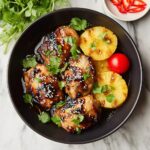
Delicious Pineapple Teriyaki Chicken featuring tender chicken breasts cooked to perfection in a savory and sweet homemade teriyaki sauce with fresh pineapple chunks. This flavorful dish combines soy sauce, pineapple juice, and ginger for a tropical twist on a classic favorite, perfect for a quick and satisfying dinner.
Ingredients
Scale
Chicken
- 1 pound boneless skinless chicken breasts
- 1 tablespoon olive oil
- 1/4 teaspoon black pepper
- 1/2 teaspoon sesame oil
Teriyaki Sauce
- 1/4 cup soy sauce
- 1/4 cup pineapple juice
- 2 tablespoons brown sugar
- 1 tablespoon rice vinegar
- 1 tablespoon honey
- 1 teaspoon grated ginger
- 1 clove garlic, minced
Thickener
- 2 teaspoons cornstarch
- 2 tablespoons water
Mix-ins and Garnish
- 1/2 cup fresh pineapple, chopped
- 1 tablespoon sesame seeds (optional)
- 2 green onions, sliced (optional)
Instructions
- Heat the skillet: Heat olive oil in a large skillet over medium-high heat to prepare for cooking the chicken.
- Season chicken: While the skillet heats up, season both sides of the chicken breasts with black pepper to add basic flavor.
- Cook chicken: Once the skillet is hot, add the chicken breasts and cook for about 5-7 minutes per side, or until fully cooked with an internal temperature of 165°F, developing a nice sear.
- Remove chicken: Remove the cooked chicken from the skillet and set it aside on a plate to rest.
- Reduce heat and prepare sauce base: Lower the heat to medium in the same skillet to prepare the sauce without burning.
- Add sauce ingredients: Add soy sauce, pineapple juice, brown sugar, rice vinegar, honey, grated ginger, and minced garlic into the skillet.
- Combine sauce: Stir the mixture well, scraping up any browned bits from the chicken to infuse flavor.
- Simmer sauce: Allow the sauce to simmer for 3-5 minutes so the sugar dissolves and it thickens slightly.
- Make cornstarch slurry: In a small bowl, whisk cornstarch and water together to create a smooth slurry that will thicken the sauce.
- Add slurry to sauce: Slowly pour the cornstarch slurry into the simmering sauce while stirring constantly to avoid lumps.
- Thicken sauce: Continue cooking the sauce for another 2-3 minutes until it reaches a glossy, thick consistency.
- Add pineapple: Stir in the chopped fresh pineapple to incorporate sweetness and texture into the sauce.
- Return chicken to skillet: Place the cooked chicken breasts back into the skillet, spooning sauce over them to coat thoroughly.
- Simmer chicken in sauce: Let the chicken simmer in the sauce for 2-3 minutes to absorb the flavors.
- Finish with sesame oil: Drizzle the sesame oil over the chicken and sauce and stir gently to combine the flavors.
- Serve: Remove the skillet from heat and transfer chicken to serving plates.
- Garnish: Sprinkle optional sesame seeds and sliced green onions on top for added crunch and color.
- Accompany: Serve the pineapple teriyaki chicken with rice or your favorite side dish for a complete meal.
Notes
- Ensure chicken is cooked through by checking the internal temperature with a meat thermometer; it should read 165°F.
- For a gluten-free version, use gluten-free soy sauce.
- The fresh pineapple adds natural sweetness and texture—canned pineapple can be used as a substitute but drain excess juice.
- You can adjust the sweetness by varying the amount of brown sugar and honey according to taste.
- Sesame seeds and green onions are optional but add nice texture and visual appeal.
- Allowing the chicken to simmer in the sauce at the end helps it soak up the flavors for a tastier dish.