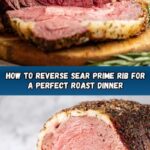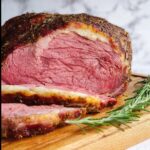
Description
This Reverse Sear Prime Rib recipe offers a perfectly cooked, juicy rib roast with a flavorful crust using a two-step cooking method. It involves a low-temperature slow roast to ensure even doneness and tender texture, followed by a high-heat sear to develop a beautifully browned crust. Ideal for special occasions, this hands-off approach requires some planning ahead but delivers restaurant-quality results at home.
Ingredients
Scale
Prime Rib Roast
- 1 (6-pound) bone-in standing rib roast (fat trimmed to about 1/2 inch)
Seasonings
- Kosher salt (generously for dry salting)
- Freshly ground black pepper (to taste)
- 4 tablespoons unsalted butter (softened)
- Fresh rosemary and/or thyme (optional, for mixing with butter)
Instructions
- Before you begin (important timing notes): Read all steps carefully. Salt the roast 24 hours ahead for optimal flavor and texture. Allow about 2 hours for the roast to rest at room temperature before cooking. The low-temperature roast takes 3 to 4 hours depending on oven temperature and size. After a long rest of 30–60 minutes, the final sear takes 5–10 minutes, followed by a short rest before slicing.
- Seasoning (ideally 24 hours ahead): Generously season the roast with kosher salt on all sides. Place on a rack over a baking sheet and refrigerate loosely covered to allow the surface to dry and salt to penetrate deeply. This step is critical for flavor and crust development. If short on time, season as early as possible.
- Preparation before roasting: Remove the roast from the refrigerator about 2 hours before cooking to reach room temperature. If using butter, mix softened butter with black pepper and optional herbs, then slather evenly over the roast. If not using butter, simply season generously with black pepper.
- Prepare for roasting: Preheat your oven to a low temperature between 200°F and 225°F. Place the roast fat side up on a roasting rack inside a roasting pan or a wire rack in a rimmed baking sheet. Insert a meat thermometer into the thickest part of the roast, avoiding the bone.
- Low-temperature slow roast: Roast the meat until it reaches your desired internal temperature before searing: Rare (120–125°F), Medium-rare (130°F), Medium (135°F), or USDA minimum (145°F). The total roasting time varies but generally is about 30 minutes per pound at 225°F or 30–45 minutes per pound at 200°F. Use the thermometer to monitor doneness rather than relying on time alone.
- Resting (critical for juicy meat): Remove the roast from the oven, tent loosely with foil and let it rest at room temperature for 30 to 60 minutes to allow juices to redistribute and develop even cooking.
- High-temperature searing: Increase the oven temperature to 450–500°F. Ensure good ventilation and safety precautions due to possible smoke. If excess fat has collected, transfer the roast to a clean pan before searing. When fully heated, return the roast and sear for 5 to 8 minutes until a deep brown crust forms. Monitor closely to prevent burning.
- Final rest and serving: Remove the roast from the oven and let it rest a few minutes before carving. Slice and serve immediately for best flavor and texture.
Notes
- Salt the roast ideally 24 hours before cooking for best flavor and texture development.
- Allow the roast to come to room temperature before cooking for more even results.
- Use an accurate meat thermometer to ensure perfect doneness.
- Ventilate your kitchen well during the high-heat sear to manage smoke.
- Resting both before and after searing is crucial for juicy and tender meat.
- If pressed for time, at minimum salt as early as possible and adjust resting periods accordingly.
- This technique is flexible for selecting rare to medium doneness levels.